Foundation raising in Norfolk VA - your home lifted onto new, higher support
Water in the crawlspace after every big storm? We lift your house and build a new, higher foundation under it.
- Licensed and insured.
- Free estimates at your property.
- Expect a reply within 1 business day.
Can my house in Norfolk be raised, and what does it take?
Foundation raising in Norfolk, VA lifts your house off its old foundation, holds it up while new, higher concrete support goes in underneath, and sets it back down, so the same house sits farther from the water that keeps finding it.
Usually the call comes after the crawlspace has flooded a few times, or after a storm put water on the first floor. Whether your house suits a lift starts with what it sits on, so that's my first question. The price and the schedule turn on that foundation, along with the size and weight of the house, whether the outside is brick or stucco, how high it has to go and what new steps or ramp you'll need to get back in. We're licensed and insured, and the written estimate I leave you spells out the prep, the lift and anything you'll need to plan around.
How our foundation raising work runs
Every house lifts a little differently, so I start with your foundation type and what's on your walls before anything else gets planned. Then our crew separates the house from its old foundation, raises it on hydraulic jacks and sets it on temporary supports, because it has to stay level and still the whole time it's up. With the house held there, we build the new, taller foundation underneath, and that's where I spend most of my attention, since a lift is only as good as the concrete it comes down on. If the budget gets tight, I'd rather trim the look of the new stairs than the footings, the wide concrete base the walls stand on, because nobody sees footings until they give trouble. We set the house down on the new foundation, and the steps or ramp we talked about at the first visit go in last, since your old front steps won't reach a door that's sitting higher.
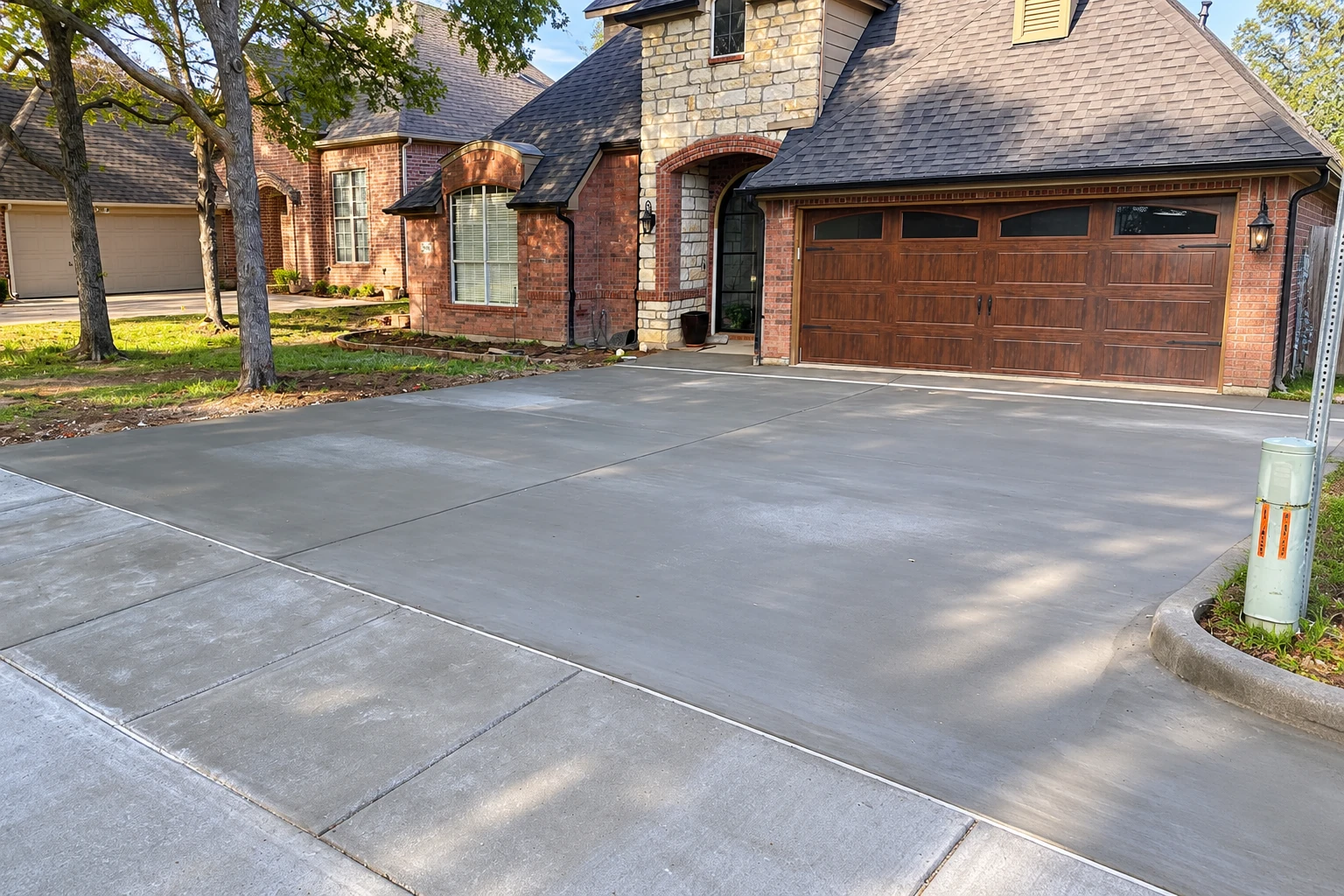
A lift often touches the concrete around the house too. When an old stoop, slab or wall is in the way of the new foundation, we take it out with concrete cutting instead of hammering it apart next to the house. If the new entry changes where you park or walk up, we can pour a new concrete driveway that meets the house at its new height.
Taller walls around a crawlspace
This suits most houses that already sit on a crawlspace or basement, because it keeps the closed-in look from the street and a space below. The walls just go up taller, and the house sits back down the way it did before, only higher.
Open piers or columns
This suits houses in the lowest, wettest spots, because floodwater runs through underneath instead of pushing against solid walls. You give up the enclosed look, but there's far less wall for the water to fight.
If your crawlspace or first floor has already taken water, call (757) 731-7228 now rather than after the next storm, so the planning starts while the house is dry.
What happens when you call about raising your house?
Raising a house takes more planning than most concrete work, so most of my time goes in before the crew ever shows up. Here's how it runs from your first call to the last walk around.
Call or send the form
You tell us a little about the house and where it is, and we set a time for me to come out. It helps to have your foundation type, wall covering and flood zone handy.
I look the house over
I check what the house sits on, what's on the walls and how you get in and out now, and I ask a lot of questions about how you use the place. You get a written estimate that spells out the prep, the lift and anything you'll need to plan around, so the price isn't a guess.
Our crew lifts and rebuilds
Our own crew does the work, and I'm on site for the lift, the pours and the tricky parts. If something turns up once the old foundation is open, I tell you before we change anything.
We walk the job together
When the house is down on its new foundation and the new steps are in, I walk the whole job with you. We call it done after that walk, not before.
Get a written plan for raising your house
We reply within one business day to set a time, then I come out for a free look at your property and write up what we'd do and why. No pressure, no obligation.
(757) 731-7228Why foundation raising matters in Norfolk
Norfolk sits low and close to the water, so heavy rain, hurricanes and nor'easters all push water into yards and crawlspaces here. It isn't easing off on its own, because relative sea level in Norfolk rose more than a foot between 1930 and 2010, and half of that came from the land itself sinking. That's why I'd rather get a house well up out of the way than keep patching around the water, and why I ask how high it has come at your place before I talk about how high to go.
We see a lot of older homes on low crawlspaces near the water, and those are often good candidates for a lift. We're based in Norfolk and do the same work in the cities around it on both sides of the state line, including Portsmouth and Chesapeake.
Foundation raising questions from Norfolk homeowners
Can a slab home in Norfolk be raised?
Sometimes, but raising a house built on a concrete slab at ground level while keeping the slab in one piece is hard to do and often isn't practical. Homes on crawlspaces, basements and open foundations lift much more easily, so if yours is on a slab, I'll tell you plainly at the estimate whether a lift makes sense.
What is the best way to handle brick or stucco walls when raising a house?
Brick veneer and stucco have to be taken off or braced so they stay in place while the house goes up. Expect that extra step in your written scope, and ask me at the visit exactly how we'd handle your walls.
What goes under a raised house in a Zone A flood area?
If the space under your raised house is enclosed and you're in Zone A, a flood map zone, federal flood insurance rules require flood openings in those walls. The openings let water in and out so the pressure evens out on both sides, crawlspace walls included, so we plan them into the new foundation from the start.
How do I get help paying to raise my house in Norfolk?
Start with the city, because you can't apply to FEMA for this money yourself, but the City of Norfolk may send the application to the state on your behalf. A news report describes a voluntary city program that elevates homes, fills basements and floodproofs, picking the most at-risk houses by flood exposure, elevation data and flood history, with its flood funding paying for all the improvements on those homes. The city's hazard mitigation page is the place to check where you stand.
How much does it cost to raise a house in Norfolk?
There's no one price, because the cost follows the house, its foundation, its walls and how high it has to go. A slab, a brick or stucco outside, a bigger lift or a ramp instead of stairs all add work, while a lighter house on a crawlspace sits at the simpler end. Your written estimate gives you the figure for your house.
What license does a contractor need to raise a house in Virginia?
Virginia sets a contractor's license class by the value of a single contract, so the class has to fit the size of your job. Class C covers contracts over $1,000 but under $30,000, Class B covers $30,000 or more but under $150,000, and Class A covers $150,000 or more.
Related concrete work around a house lift
When an old stoop, slab or wall sits where the new foundation has to go, a clean saw cut takes it out with less pounding near the house.
Once the house sits higher, the old driveway may end at the wrong height or spot, and a new one can meet the raised entry where you'll walk in.
Find out if your house can be raised
Call (757) 731-7228 or send the form, because the sooner I see what your house sits on, the sooner you know whether a lift fits it.