Concrete Contractor in Hampton, VA - Slabs Planned for Where the Water Goes
Groundwork Norfolk Concrete is a concrete contractor based in Norfolk. In Hampton, VA, we pour driveways, patios, steps, slabs, footings and walls, and we take on the harder jobs like cutting old slabs and raising foundations.
- Concrete driveway building
- Concrete patio construction
- Stamped concrete services
- Concrete sidewalk building
- Garage floor concrete
- Decorative concrete
- Concrete retaining walls
- Concrete floor installation
- Concrete pool decks
- Concrete steps construction
- Slab foundation building
- Foundation installation
- Concrete parking lot building
- Concrete footings
- Foundation raising
- Concrete cutting
- Licensed and insured.
- Free estimates at your property.
- Expect a reply within 1 business day.
Hampton jobs start with where the water goes
Most of our Hampton calls are about a driveway that has sunk, a patio that holds water or front steps pulling away from the porch. Some come from small business owners and builders who need a lot, footings or a slab. It's the same work our crew does around Norfolk and out in Suffolk and Virginia Beach. The price follows the size of the job and how much ground work sits under the concrete. The schedule turns on permits, the weather on pour day and curing, which is the stretch of days new concrete needs to harden before it can take your weight or your car. At the estimate I write up what we'd do for your job and why.
Plenty of Hampton sits close to the water, and a lot of its houses have been there long enough that yards have settled, downspouts have moved and nobody knows what's under the old slab. So I spend most of an estimate looking at the ground and where the rain goes, because that's usually where bad concrete starts, not in the pour.
Hampton properties and the water around them
- Many homes in Hampton flood when a disaster hits, and the city says the smaller, routine flooding is coming more often, so a new slab has to shed water, not trap it.
- A driveway that falls toward the house sends rain at the foundation, so we check which way the yard falls and where the downspouts empty before we set forms.
- Big shade trees in older yards lift walks and driveway edges with their roots, so we look at what's growing nearby before we decide where the new slab goes.
- Plenty of lots here are tight, with narrow driveways and fences close in, and how near the concrete truck can get decides how much has to be wheeled or pumped in.
Concrete work we do on Hampton properties
Concrete driveway building
When the old driveway has sunk, cracked across or holds puddles, we tear it out, dig to firm ground, pack a new base and pour.
Concrete patio construction
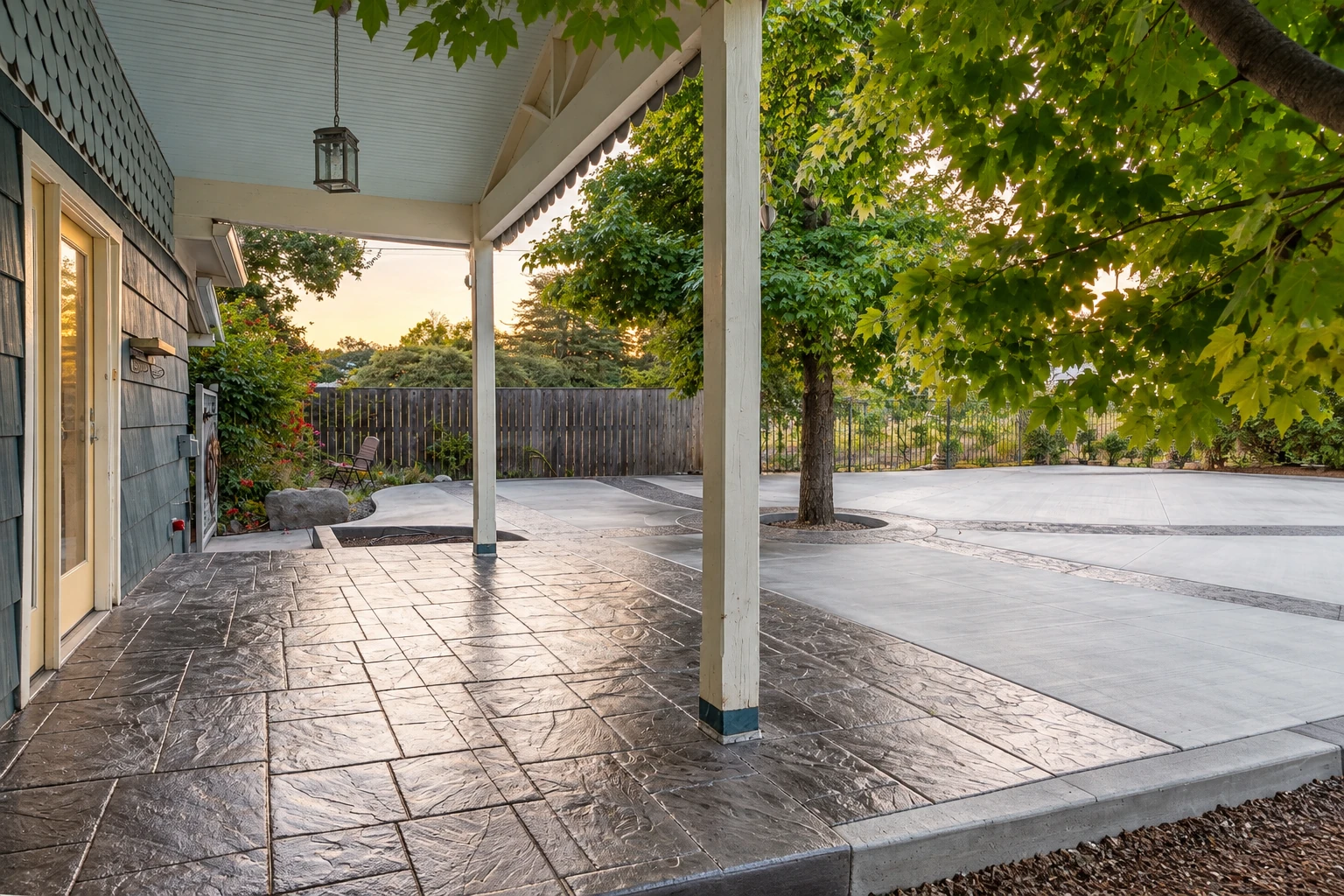
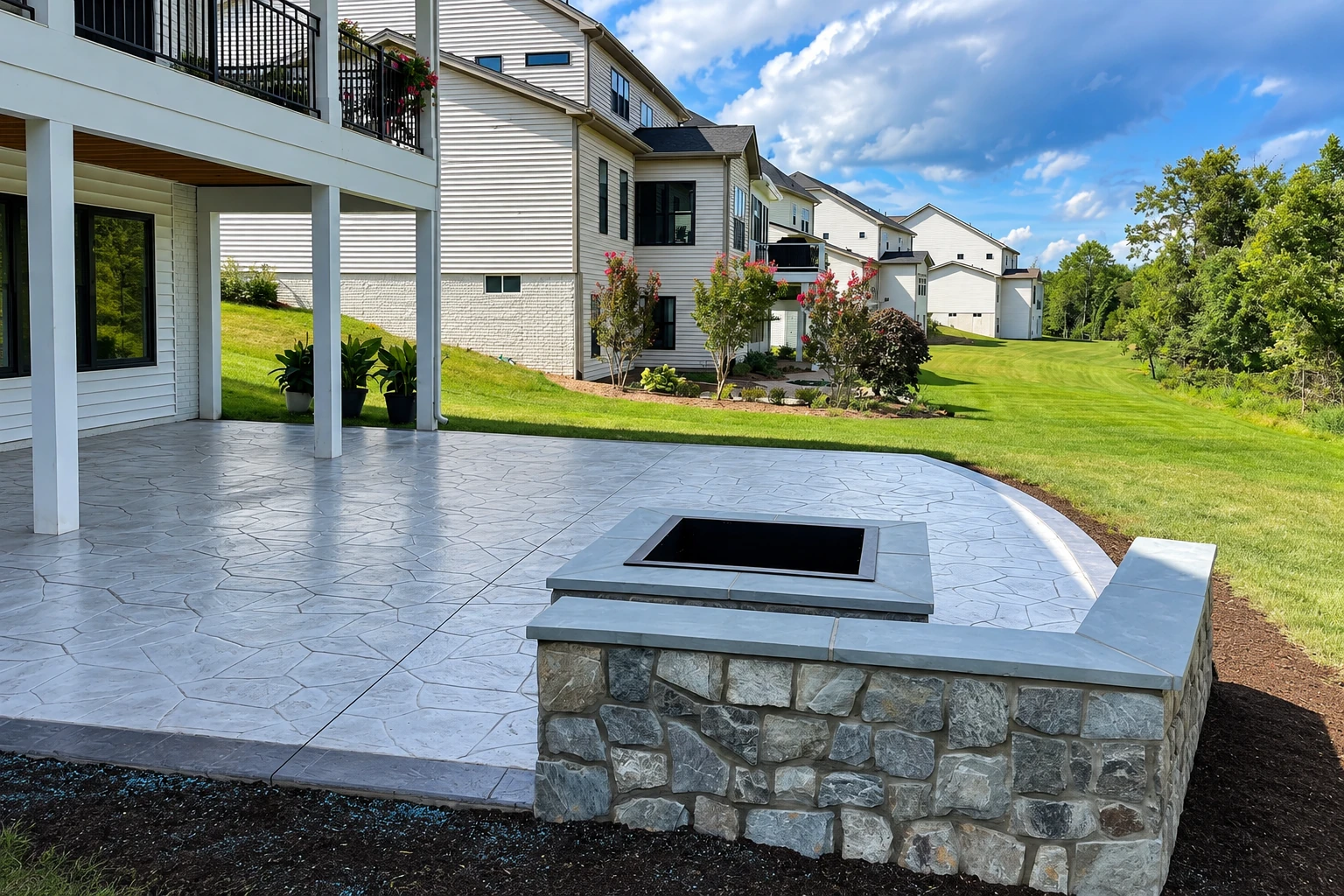
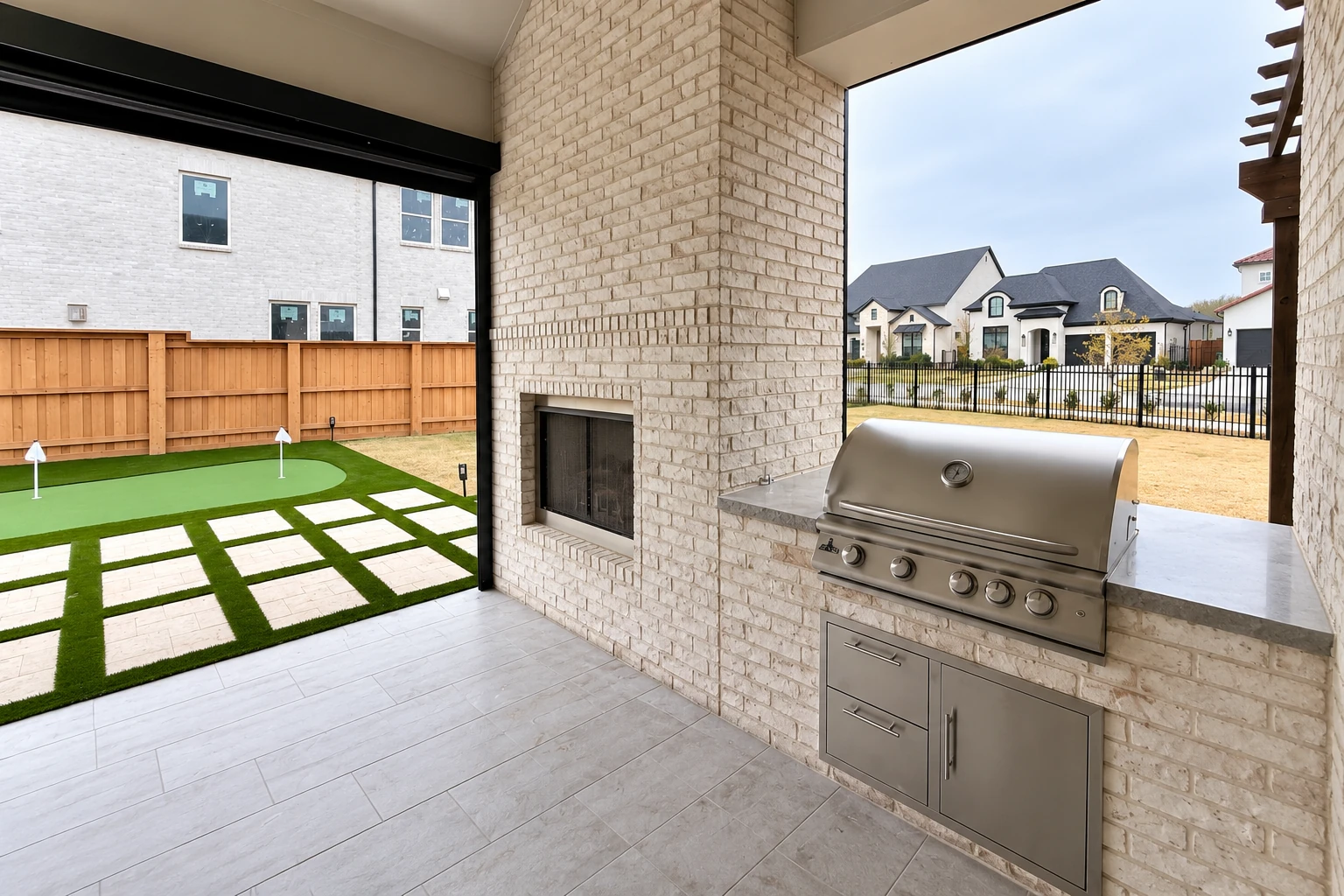
We pitch a backyard patio away from the house and cut its joints where we choose, so rain runs into the yard instead of toward your back door.
Stamped concrete services
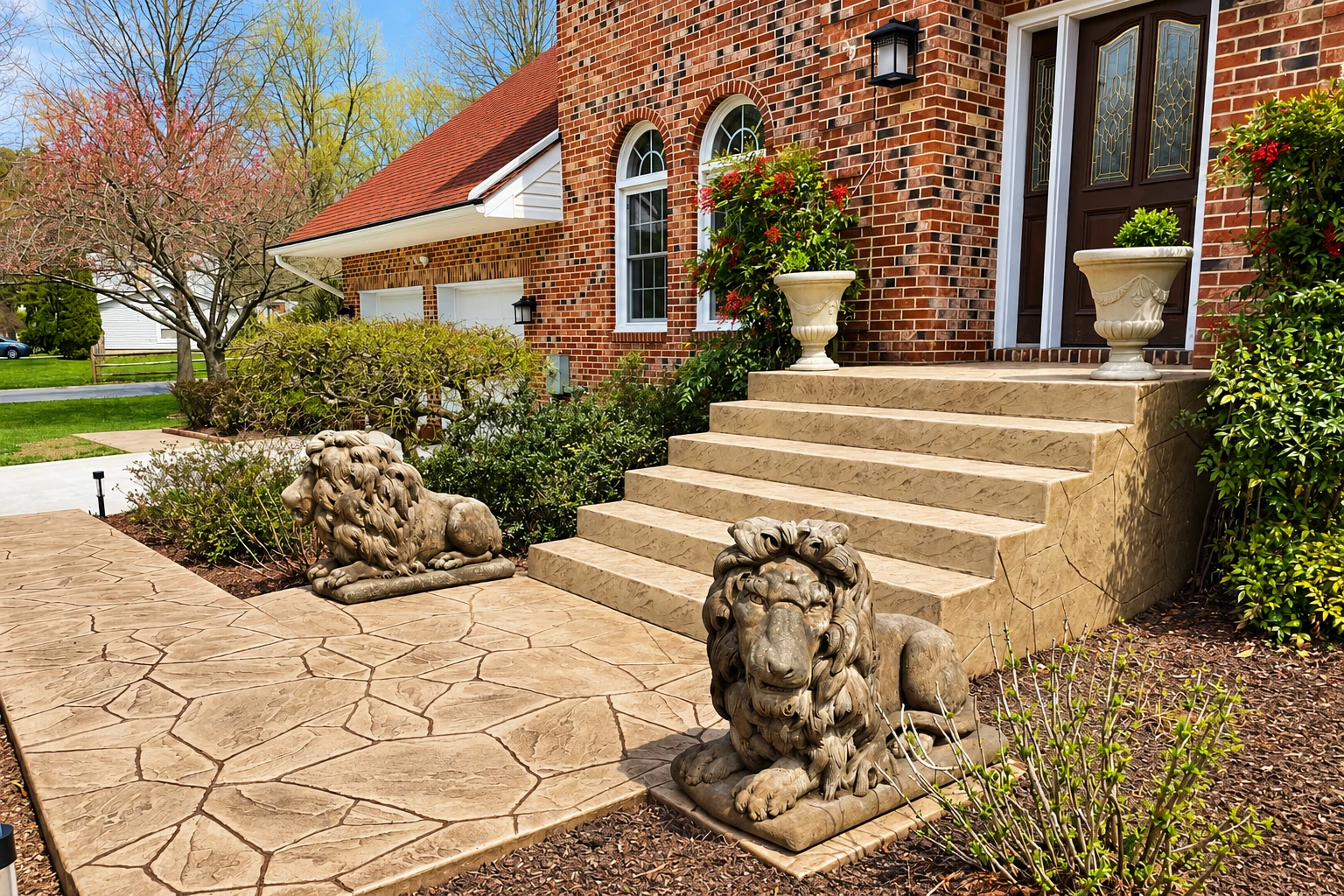
Stamped concrete gives a patio or walk the look of stone or brick in one pour, and we seal it so the pattern holds up to foot traffic.
Concrete sidewalk building
When a front walk has heaved over roots into a trip hazard, we break it out and pour new, with a brushed broom finish for grip when wet.
Garage floor concrete
A cracked or stained garage floor can be replaced with a new slab on a packed base, sloped so water off the car drains out the door.
Decorative concrete
We pour colored concrete or exposed aggregate, with the small stones showing on top, for an entry, walk or patio border that looks finished without paver weeding.
Concrete retaining walls
Where a yard steps down or a driveway cuts into a bank, a wall with drainage behind it holds the dirt so water can't push it over.
Concrete floor installation
Interior slabs for a sunroom, workshop or small business space, poured over a packed base and a vapor barrier so ground moisture doesn't come up through your flooring.
Concrete pool decks
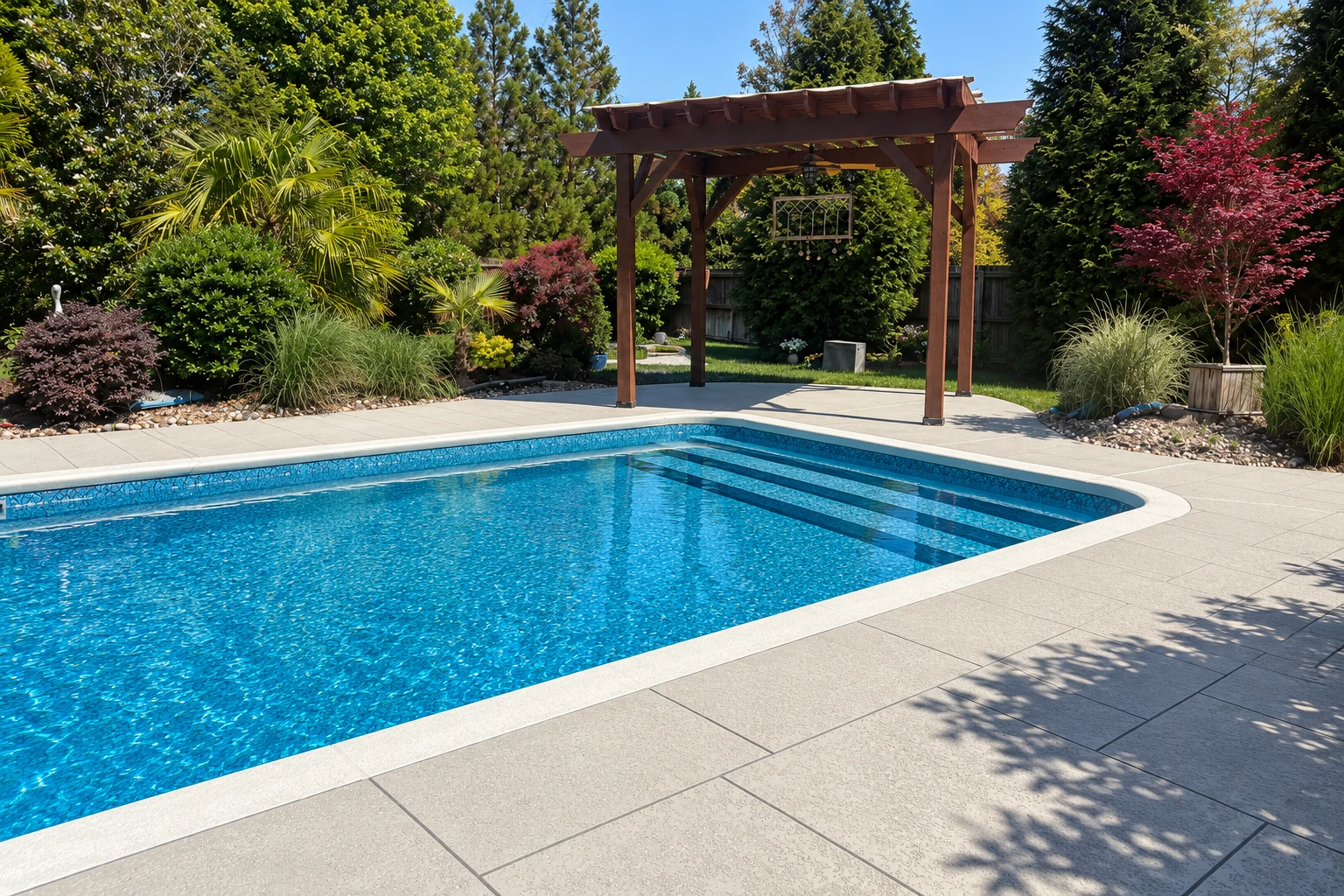
Around an in-ground pool we pour a deck that slopes away from the water and drains, with a textured top that stays safer underfoot when it's wet.
Concrete steps construction
Front steps that have settled or pulled away from the porch get torn out and rebuilt on footings, with even step heights so nobody catches a toe.
Slab foundation building
For a new garage, addition or shed, we pour the slab foundation with rebar, the steel rods that hold it together if it cracks, on a packed base.
Foundation installation
Foundation walls for additions and new builds, laid out and poured to the plans so the framing crew starts on something square and level.
Concrete parking lot building
For a small business lot, we plan the grading and drains first, then pour a slab built to carry cars and delivery trucks.
Concrete footings
Footings for a porch, deck, wall or column, dug to firm ground and poured with steel, because whatever sits on top only stays put if they do.
Foundation raising
When part of an older house has settled and doors stick or floors crack, we find out why it sank before we lift and support it.
Concrete cutting
We saw clean openings through slabs and walls for a new drain, door or utility line, even when nobody has drawings of what's inside the concrete.
- Request an estimate
Get a free on-site concrete estimate in Hampton
Send the form and we'll reply within one business day to set a time. I usually come out to your Hampton property myself, walk the job, take measurements and write up what we'd do and why. The estimate is free, and there's no pressure and no obligation.
(757) 731-7228Hampton concrete questions we hear most
Do I need a permit to pour a concrete driveway or patio in Hampton, VA?
The city says a new driveway or patio normally needs no permit unless it disturbs more than 10,000 square feet of land, but inside the Chesapeake Bay protection zones it does need one. Those zones reach 200 feet from certain wetlands and waterways, sometimes including a ditch that drains to the bay. A slab for a shed, deck, pool or addition is a different matter, because the city requires a permit for those. If it's not clear where your yard falls, we ask the city's Development Services Center before we start, not after.
How do I get a building permit for concrete work in Hampton?
You apply through the city, and it only issues permits to the landowner, the owner's agent or a contractor licensed by both the state and the city. When your job needs one, we pull it ourselves, list our business as the responsible party and set up the inspections. You can follow along on the city's online permit center, which lets you check a permit's status or request an inspection at any hour.
What license does a concrete contractor need to work in Hampton, VA?
A concrete contractor needs a state contractor license from Virginia's Board for Contractors and a Hampton business license from the city's Commissioner of the Revenue before doing work in the city. The state license's class sets how large a contract the company can take on, and its specialty sets the kind of work it covers. We're licensed and insured.
Do Hampton's floodplain rules affect a new slab or an addition?
Yes, if your house is in the 100-year floodplain, the city reviews and permits all proposed development there, additions included. If the work adds up to half or more of the building's market value, the whole building has to meet the rules for new construction and may need raising above the 100-year flood level. The same goes for a badly damaged building, whatever caused the damage. We plan the foundation around that review before we dig, since it can change how high the slab has to sit.
How much does a new concrete driveway cost in Hampton, VA?
The price comes down to the size and thickness of the slab, how much old concrete has to be broken out and hauled off, and how much digging and packing the base needs. A plain broom finish costs less than stamped or colored concrete, and a tight lot where the truck can't back in adds labor. If the budget has to give somewhere, I'd rather you skip the fancy finish than the base, because nobody sees the base on day one but it's what keeps the slab from sinking.
What causes concrete driveways in Hampton to crack and sink?
Most of the time it's the subgrade, the dirt the slab sits on, which got raked flat instead of dug out and packed, so it settled and took the concrete with it. Cracks also wander when control joints, the shallow cuts that tell a slab where to crack, were cut late or skipped. Concrete does crack, and I won't tell you otherwise, but we pack the base, set the slope and cut the joints on time so any crack is far more likely to land in a joint.
Call about your Hampton concrete job
Call (757) 731-7228 or use our estimate form before the old slab comes out, because its cracks and low spots show me what went wrong underneath.